SHIPS
Ships pictured below which were torpedoed, mined or sunk in Australian Waters
Which I believe did not have any Australians as Crew
During the first Japanese bombing raid on Darwin on 19 February 1942, the Merchant Navy suffered significant losses, with at least five merchant ships sunk in the harbour and others severely damaged. The attack, which was the first and largest foreign attack on Australian soil, saw a massive force of 188 Japanese aircraft strike at 9:58 AM, targeting the densely packed shipping in the harbor.
Merchant Vessels Sunk on 19 February 1942
- MV Neptuna: A 5,952-ton freighter, which was hit alongside the wharf while unloading, catching fire and exploding.
- USAT Meigs: A 7,358-ton US Armed Transport (freight ship).
- SS Mauna Loa: A 5,436-ton US Armed Transport.
- SS Zealandia: A 6,683-ton troopship.
- MV British Motorist: A 6,891-ton tanker that sank after being hit, killing the master and wireless operator.
Other Vessels Destroyed/Lost
- Kelat: A 1,849-ton coal hulk, which sank at its moorings.
- Karalee: An oiler/lighter that sank later.
- HMAS Mavie: A small lugger.
- Florence D. and Don Isidro: Two further merchant ships were lost in follow-up attacks later that day.
Casualties and Impact
- Wharf Casualties: The attack on the MV Neptuna and the surrounding wharves killed at least 21 "wharfies" (labourers) and numerous crew members.
- Total Toll: The two air raids on 19 February 1942 killed over 250 people, including many merchant mariners, and wounded 300-400.
- Secretive Losses: Because of wartime secrecy, the significant contribution and losses of the merchant navy were not widely recognized until recently.
Other ships, including the hospital ship HMAHS Manunda and the freighter SS Admiral Halstead (carrying 14,000 drums of aviation gasoline), were heavily damaged.
BANTAM (Dutch) - Bombed & Beached Oro Bay, Papua New Guinea 28-3-1943

Oro Bay, New Guinea 1943. The wreck of the Dutch Transport SS BANTAM, sunk in a Japanese Air Raid while taking part in Operation Lilliput.
BRITISH MOTORIST - Bombed Darwin 19-2-1942

Darwin, NT. 1942-02-19. A Tanker, the BRITISH MOTORIST, was piping oil at the wharf when the first bombs of the Japanese air raid crashed on Darwin at 10-00a.m. She managed to swing away from the wharf and back into the harbour where she was bombed by Japanese aircraft and set afire.

Darwin, NT. 1942-02-19. The Wreck of the Tanker SS BRITISH MOTORIST, sunk in the Japanese Air Raid.
CAMBRIDGE - Sunk on 7-11-1940 by a mine laid by German Raiders off the Victorian Coast with the loss of 1 crew

BASS STRAIT, 1940-11-08. Survivors of the Merchant Vessel CAMBRIDGE, Mined off Wilsons Promontory, coming alongside the Auxiliary Minesweeper H.M.A.S. Orara in one of the Cambridge's Boats.

CITY OF RAYVILLE - Sunk by German mine off Cape Otway 8-11-1940

The 38 crew members were able to safely abandon the vessel in lifeboats, although one mariner (James Bryan of Norfolk, Virginia) re-entered the vessel to find his personal items and subsequently drowned. The light keeper stationed at Cape Otway Light station witnessed the sinking, and three boats from Apollo Bay went in search of survivors. The ship's lifeboats were found, and successfully towed back to Apollo Bay, arriving at dawn, 9 November 1940. The site of the wreck is approximately 14 kilometers (8.7 mi) south of Cape Otway - Wikipedia
COAST FARMER - 21-7-1942 torpedoed & sunk 15 miles off Jervis Bay by the Japanese submarine 1-11

‘
The U.S. steamship Coast Farmer was sunk off the coast of New South Wales, Australia, by the Japanese submarine 1-11 on July 21, 1942, near Jervis Bay, during a series of Japanese submarine attacks on the Australian coast, resulting in one fatality and the rescue of the remaining 39 crew members. The vessel was struck by two torpedoes, sinking within 20 minutes, with the I-11 surfacing briefly to observe the lifeboats before departing.
DON ISIDRO (Philipines) - Bombed & Sunk Darwin Northern Territory 19-2-1942 with loss of 11 crew

She was beached in flames after being attacked by Japanese aircraft en route to bomb Darwin on 1942-02-19. Her survivors were picked up by HMAS Warrnambool.
The Merchant Ship Don Isidro, heavily damaged by bombs during the first Japanese air raid on Darwin 1942-02-19, was so badly burnt out that she was beached and abandoned aground near Melville Island.
FlORANCE D (American) - Bombed 19-2-1942

After five direct hits during the Japanese air raid on Darwin, the ship was beached on fire south of Cape Fourcroy on Bathurst Island, 19th February 1942. The initial attack by Japanese aircraft occurred forty kilometres north-west of Bathurst Island. Forty survivors landed on the island and were rescued either by H.M.A.S.Warrnambool or walked overland to the mission station, where a lugger took them to Darwin.
GEORGE S LIVANOS - Torpedoed 20-7-1942 by the Japanese submarine 1-11

The Greek-registered steamer George S. Livanos was a merchant cargo ship torpedoed and sunk by the Japanese submarine I-11 on July 20, 1942, approximately 15-20 miles off Jervis Bay, New South Wales, Australia. The entire crew survived the sinking and made it to shore safely.
GUATEMALA (Panama) - Torpedoed 12-6-1942 40 miles off Sydney, N.S.W. Her crew is rescued by HMAS DOOMBA.

The Panamanian steamer SS Guatemala was torpedoed and sunk by the Japanese submarine I-21 (some sources say I-24, as they were part of the same group) off the coast of New South Wales, Australia. The attack occurred on June 12, 1942 about 40 miles east of the Central Coast of N.S.W. near Cape Three Points.
LYDIA M. CHILDS (Liberty Ship) - Torpedoed and sunk by Japanese Submarine off N.S.W. 27-4-1943
The SS Lydia M. Child was a U.S. Liberty ship launched in January 1943, named for influential abolitionist and women's rights advocate Lydia Maria Child (1802-1880). Tragically, during its maiden voyage carrying Lend-Lease supplies from San Francisco to Suez, it was torpedoed and sunk by the Japanese submarine I-178 (or I-177) on April 27, 1943, about 90-100 miles east of Newcastle, Australia,
MAUNA LOA (American) - Bombed & sunk Darwin, Northern Territory 19-2-1942 with loss of 5 crew
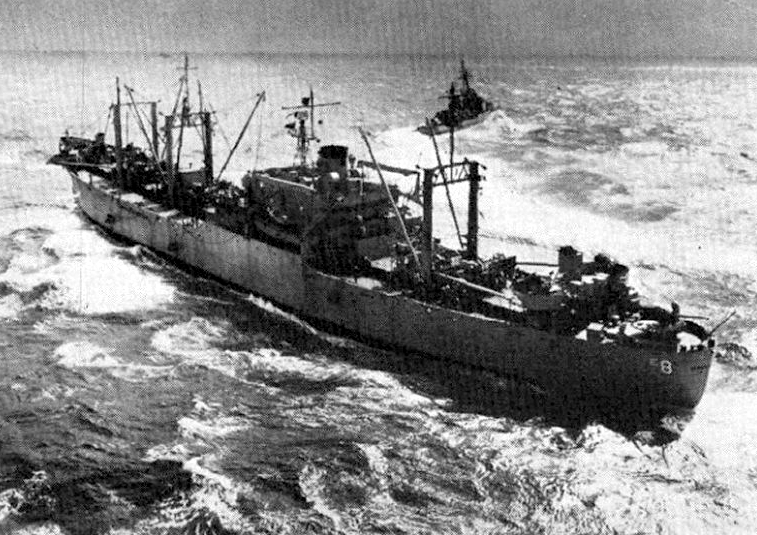
"Mauna Loa" refers to several American ships, most notably the SS Mauna Loa, a Matson cargo ship sunk by Japanese bombs in the 1942 Bombing of Darwin while chartered for war supplies, and the USS Mauna Loa (AE-8), a U.S. Navy ammunition ship from the 1940s-70s that served in WWII and Vietnam. There was also an earlier, smaller USS Mauna Loa (SP-28) patrol boat in World War I.
MEIGS - Bombed & sunk Darwin, Northern Territory 19-2-1942 with loss of 2 crew

The United States Army Transport (USAT) Meigs underway in Darwin Harbour some days before the Japanese air raid on 19 February 1942. USAT Meigs was laden with munitions, railway track, tracked machine gun carriers and trucks of the 2/4th Pioneer Regiment, which was destined for Allied forces in Portuguese Timor. However, prior to sailing she was attacked by Japanese aircraft. As the largest vessel in Darwin Harbour on the day of the attack, USAT Meigs was a prime target and she went down in flames after being struck by numerous bombs and aerial torpedoes. Two of her crew were killed.
USS PEARY (American) - Bombed & sunk Darwin, Northern Territory 19-2-1942 with loss of 80 crew

The United States Navy destroyer, USS Peary on fire and partially sunk in Darwin Harbour. The crew suffered 80 men killed and 13 wounded after she was was struck by five bombs when attacked by single motored Japanese dive bombers during the first air raid on Darwin. On the right is the Hospital Ship Manunda.

Townsville Daily Bulletin (Qld) 11-4-1942
LOSS OF U.S.S. PEARY
Suffered Five Direct Hits
PERTH. April 8.— The U.S. destroyer, Peary, suffered five direct hits in the first Japanese raid on Darwin on February 18, survivors said here. . .
A Washington communique last Saturday announced the loss of the Peary (1,138 tons) at Darwin.
Fifty-three Injured members of the Peary's crew are in a Perth military hospital Laurence T. Farley, 28, of West 'Virginia, who was foreman water tender on the Peary, said that before the Peary went to Darwin she had suffered casualties, but little damage, in Jap raids in the Philippines.
One or the tombs that hit the Peary at Darwin struck a galley passage in which a shipmate and I were, Farley said. 'I was .badly burned, and my eyes were affected. With my companion, I went on deck and dived, overboard. I swam towards the hospital ship Manunda, but, as I neared her, I saw the Japs attack her. I turned and swam back. My burned legs and arms and shoulder were greatly troubling me. As I swam I saw Jap planes machine-gunning men in the water. Some were shot as they swam. Others sank exhausted. Bullets smacked the water all round me, but I was not hit by them. By then a bomb blast had so affected me that I could not see. A lifeboat from the Manunda picked me up and took me on board. As a result of treatment here, I have made a wonderful recovery. I had expected to be a cripple.
S S PORTMAR - Damaged & beached in the First Japanese air raid on the Australian Mainland (Darwin) 19-2-1942 with loss of 2 crew.

Darwin, Northern Territory Feb 1942 - The SS Portmar, used by the Americans as a troopship in the unsuccessful attempt to reinforce the Timor Garrison, is seen beached after being damaged in the first Japanese Air Raid on the Australian Mainland on 19-2-1942
ROBERT J WALKER (U.S. Liberty Ship) - Torpedoed by German Submarine U-862 about 60 miles south of Jervis bay on 25-12-1944 with the loss of 2 crew

This damaged wooden name board was found on the beach at Bherwerre Beach, near Sussex Inlet NSW after the Liberty ship SS Robert J Walker was sunk in December 1944.
Barrier Miner (Broken Hill, N.S.W.) 13-3-1945
Liberty Ship Lost
Off Australian. Coast
SYDNEY.-An American Liberty ship, the Robert J. Walker, was torpedoed recently off the Australian coast. A dust storm was raging at the time and the Australian destroyer, Quickmatch, which went to the rescue, had difficulty in locating lifeboats and rafts. The first torpedo which struck the Robert J. Walker in the early morning cut off the ship's propeller and destroyed the steering and engines. It did not however, sink the vessel. An-S.O.S. was sent out. Two hours later the submarine fired another torpedo, but it was sighted and it was exploded by Navy gunners 1,000 yards from the ship.
A third torpedo struck the ship shortly afterwards and forced its abandonment, though it did not sink and it was later sunk by Allied gunfire. One member of the crew of the Robert J. Walker was killed and another is missing.
SIANTAR (Dutch) - Shelled, torpedoed and sunk 2-3-1942, 250 miles N.W. of Shark Bay, Western Australia

STARR KING (American) - Torpedoed 10-2-1943

United States of America Liberty Ship 'Starr King' sinks off Port Macquarie, NSW after being torpedoed by a Japanese submarine.
S S TRIASTER (British) - Sunk 7-12-1940 by a raider off Narau

SS VAN HEEMSKERK (British) - Bombed at Milne Bay 14-4-1943 with the loss of 4 crew.

Van Heemskerk and MV Balikpapan arrived at Milne Bay under escort of HMAS Kapunda on 14 April 1943 just as the twenty-fourth air raid on that port was developing and after being diverted from Port Moresby due to air raids there. The ship discharged the embarked troops but still had cargo of ammunition and fuel to be unloaded and not enough time to clear the bay. The U.S. troop commander left an improvised defence of twenty U.S. soldiers who placed a jeep with mounted .50 calibre machine gun on each hatch for defence until, after surviving four masthead level attacks, a hit in a hold containing ammunition and fuel destroyed the jeeps and crews. Despite efforts of HMAS Wagga and her crew to control the fire the ship blew up at about five in the afternoon with four killed, the last casualty of Lilliput. Loss of Van Heemskerk caused the only cancellation of a Lilliput flight with 39 of 40 being completed.
S.S.WILLIAM DAWES - Torpedoed 22-7-1942 by the Japanese submarine 1-11, with the loss of 5 crew ( 1 US soldier & 4 Naval Armed Guards)

On the 22nd of July 1942 the 7,176-ton American Liberty ship SS William Dawes was torpedoed off Turingal Head by the 2,900-ton Japanese submarine I-11. On route from Adelaide to Brisbane with a crew of 39 Merchant Seamen, 15 Naval Armed Guards and 3 army soldiers, the ship was carrying a cargo that included ammunition, lorries, jeeps, field ambulances and half-track vehicles. At about 4.30 p.m. the ship sank stern first with five lives lost. The William Dawes’ lifeboats with 58 survivors were heading for land when Merimbula fishing trawler The Lass reached them. After linking them together with lines, they were towed back to the jetty in Merimbula.
Create Your Own Website With Webador